What does future hold after Celtic turn to the past?
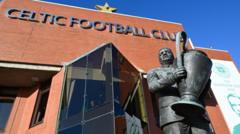
**What Does the Future Hold After Celtic Turns to the Past?**
In the landscape of Scottish football, few clubs command the reverence and history that Celtic FC does. The recent exit of manager Brendan Rodgers has stirred deep reflection among players, fans, and pundits alike. As the dust settles on this significant departure, BBC Scotland's Scott Mullen examines what lies ahead for a club that is now looking towards its past to redefine its future.
Brendan Rodgers, who enjoyed two successful stints at Celtic Park, has etched his name into the annals of the club's history. However, his decision to leave—a move that many perceived as sudden—has left Celtic in a precarious position. Under his guidance, Celtic not only dominated the Scottish Premiership but also made notable strides in European competitions, dazzling fans with tactical prowess and thrilling matchday experiences. But with Rodgers no longer at the helm, questions arise: Who will lead Celtic into the next chapter, and what direction will the club take?
Celtic’s management appears to be leaning toward a nostalgic route with potential candidates who have a history with the club. Names such as Neil Lennon and Frank McGarvey have emerged, hinting at a desire to reconnect with the club’s storied past. While a familiar face can offer instant rapport with the fans and an understanding of the Celtic ethos, it also raises concerns about innovation and evolution in tactics that fans now demand from a modern manager. As Celtic fans know all too well, football is often about cycles; it remains to be seen if revisiting these cycles will bring fresh energy or continue an outdated narrative.
Moreover, the departure of Rodgers comes at a crucial time when the club is aiming to solidify its dominance domestically and make a stir in Europe. The continuity of success is paramount, especially considering the increasing competition from teams like Rangers, who are recalibrating and refining their approach. Bringing in a manager well-versed in the club's culture could provide stability, but it must be accompanied by concrete steps towards adapting to a rapidly changing football landscape.
The players, too, find themselves at a crossroads following Rodgers' departure. The new managerial appointment will need to galvanize existing talents like Callum McGregor and Kyogo Furuhashi while also exploring potential signings to augment the squad's capabilities. This transitional phase presents an opportunity to reassess and recalibrate player dynamics—an opportunity that can either pave the way for future glory or exacerbate existing issues on the pitch.
As season ticket holders and fans congregate outside Celtic Park, excitement mingles with anxiety. The smell of fresh opportunity hovers in the air, but so does the weight of past expectations. Fans want to see their beloved club not only succeed domestically but also make headway in European competitions—a feat that has eluded the team for far too long. As the club assesses its options, the question of whether it can marry the heritage and ethos of its past with the demands of modern football looms large.
In conclusion, Celtic is standing at a pivotal moment, contemplating its next steps. By looking to its past to inform its future, the club must tread carefully; choosing a path that respects its rich legacy while embracing innovation could set the stage for a new era of success. Ultimately, what awaits Celtic could be a thrilling journey back to the summit of Scottish football or a stumbling return that leaves fans yearning for what was once achieved under the stewardship of a revered figure like Brendan Rodgers. The next few weeks will be crucial as Celtic shapes its new identity following this significant chapter in its storied history.


Comments
Post a Comment